
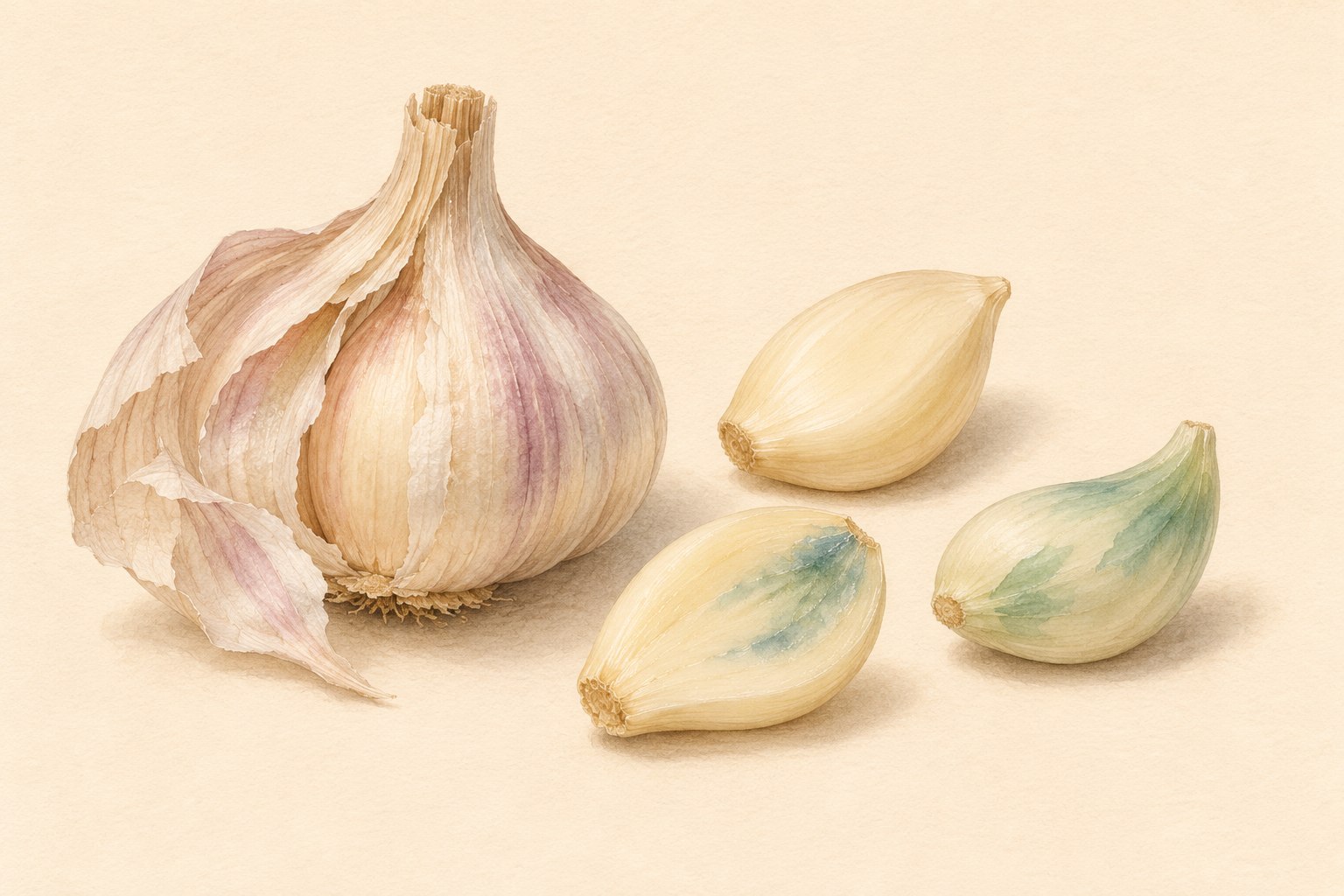
A clove that went into a pickle jar creamy white can come out turquoise. The color can come from the garlic itself. When you cut or crush a clove, you break open its cells. An enzyme inside can then react with the sulfur compounds that give garlic its familiar bite.
Where the green comes from
Some products of that reaction combine with amino acids in the clove to form pigments. Researchers studying the colors in garlic found a mixture of blue-purple and yellow pigments. Together, they can make a clove look green.
Whole cloves can change color in vinegar, too. In a study of Chinese Laba garlic, the green color developed as cloves soaked in the acid. For this traditional pickle, that vivid green is part of the appeal.
If it happens in your jar
A blue clove on its own doesn’t mean a batch has spoiled. Its color can’t tell you whether the pickles were canned safely, either. For home-canned pickles, the National Center for Home Food Preservation recommends following a tested recipe, including the strength and amount of vinegar it calls for. Keep those proportions even if you’d prefer paler garlic.