
Ever sliced into a beautifully browned ribeye and found a wide gray band around a small pink center? That’s where a reverse sear helps. The oven gently cooks the middle and dries the surface. By the time the steak hits the skillet, a brief sear is enough to build a crust.
You can start straight from the fridge. A short wait on the counter does little to warm the middle of a thick steak, and the oven is already doing that work. A reverse sear usually takes longer than cooking entirely in the skillet. The payoff is a more evenly cooked thick cut. For a thin steak on a busy night, go straight to the pan.
Before you start
Choose your steak. A boneless strip steak or ribeye about 1½ to 2 inches thick gives you time to brown the outside while watching the center.
Gather your equipment. A wire rack, rimmed baking sheet, heavy skillet, tongs, and an instant-read thermometer.
From oven to skillet
1. Start on a rack

Heat the oven to 325°F. Pat the steak dry on both sides, then season with salt. Set it on a wire rack inside a rimmed baking sheet and place it in the oven.
The rack holds the meat above its drippings and lets air reach underneath. Leave a little room around the steak so it sits flat.
2. Check the center
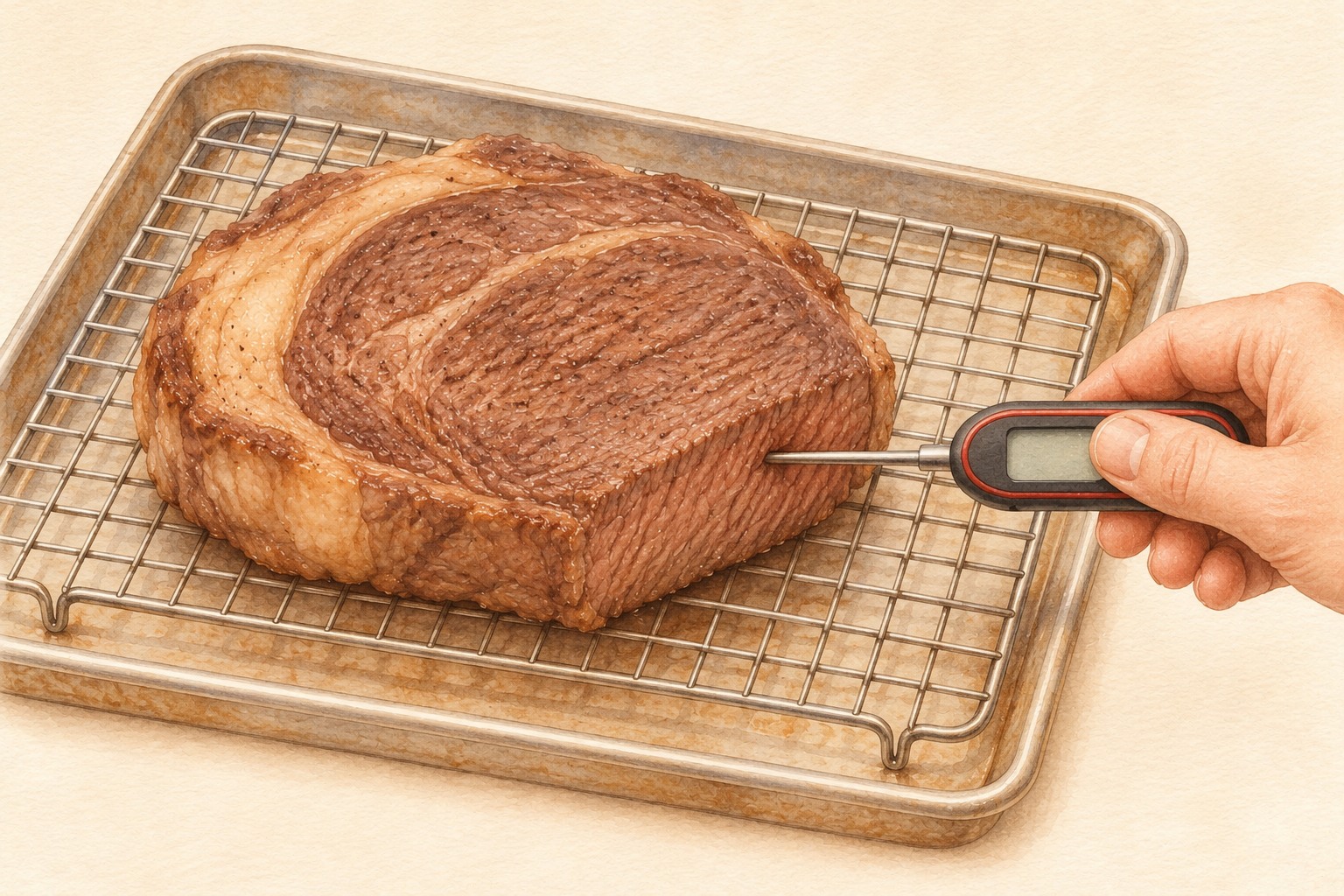
Begin checking after 10 minutes. Slide the thermometer through the side so the tip reaches the middle of the thickest part. If the temperature is still low, return the steak to the oven and check again as it approaches 130°F.
While it finishes warming, switch on the range hood and heat a cast-iron skillet over medium-high heat. Aim to have the pan ready for the handoff.
3. Sear both sides
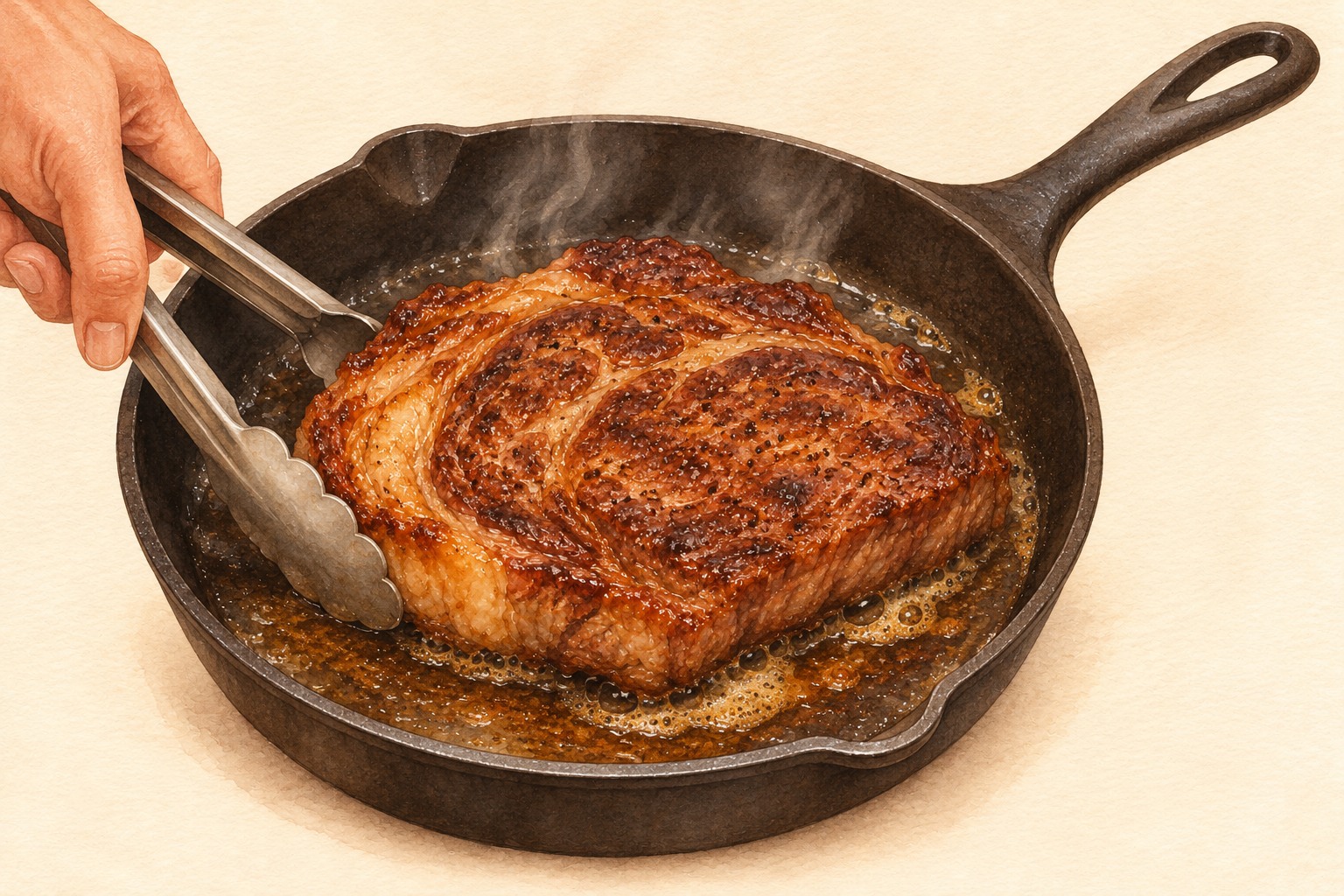
Add a thin film of canola oil to the hot skillet. When it shimmers and the steak’s center is about 130°F, move the steak straight from the oven into the pan. Lower it gently, away from you.
Check underneath after about a minute. Once it is deeply browned, turn it and brown the other side. Keep checking and flipping as needed until the center reaches 145°F. Lower the heat if the crust is ready before the center.
4. Rest, then slice
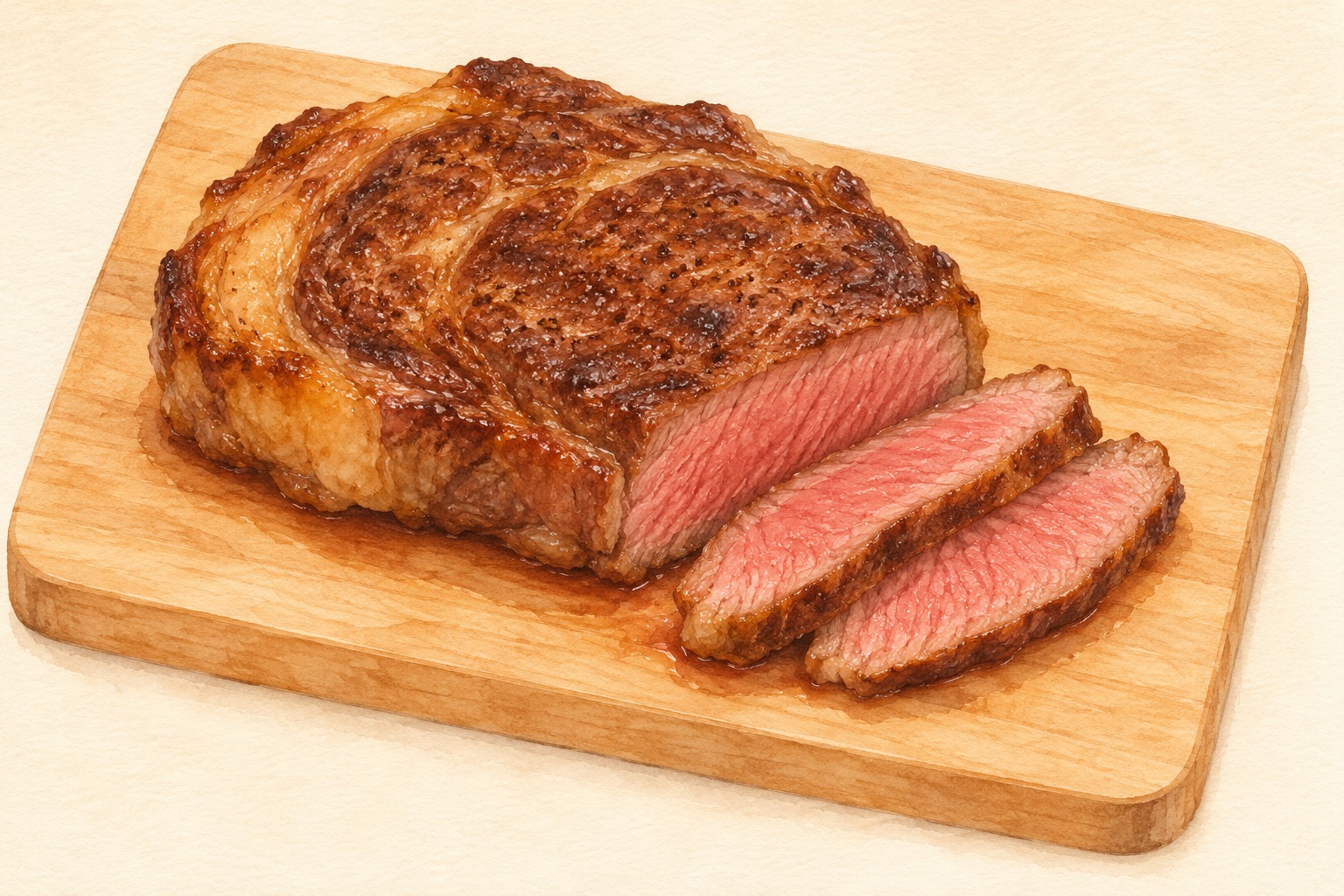
Move the steak to a clean board and leave it for at least 3 minutes. Use that pause to warm the plates or finish a side dish.
Slice across the grain, cutting through the long muscle fibers. Spoon any juices from the board over the slices just before serving.
A few things that help
A pale crust may need a little more contact with the hot pan. Give the steak room and let it sit briefly between turns. If the oil smokes heavily, lower the heat. If the crust is already dark enough, finish more gently while checking the center.
A heavy stainless-steel skillet works here, too. Choose one with enough flat space for the steak. The pan comparison explains what each pan does well.
Choose your next cut with the Butcher’s Guide, explore the Steak Doneness Explorer, or browse the Steak Guide.