
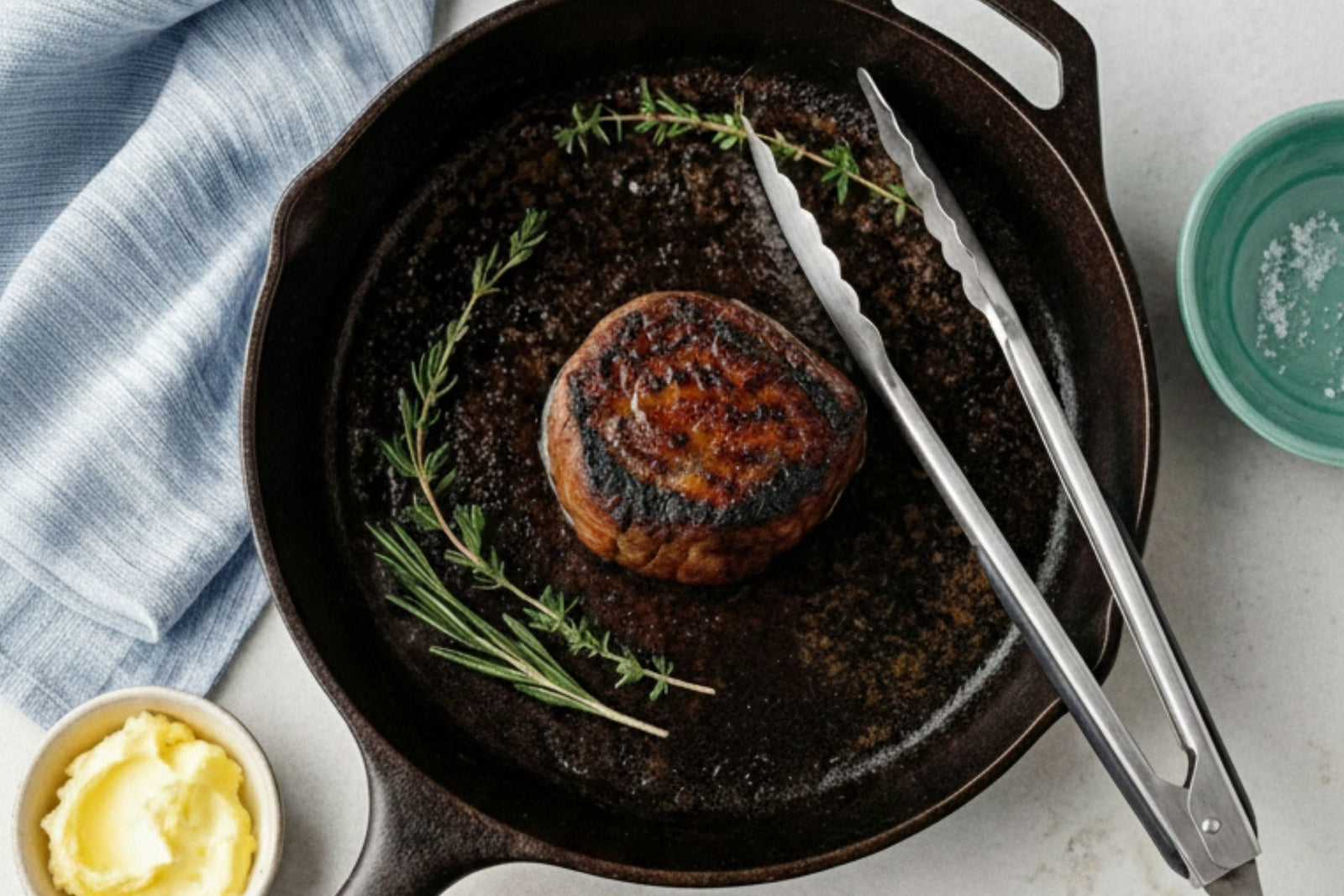
For a peppery strip steak with a pat of butter, reach for a heavy cast-iron skillet. For steak with a shallot pan sauce, pick stainless steel. Both can give you a deep brown crust. A heavy cast-iron base holds its heat when the steak goes in. The beauty of stainless shows up when you lift the meat and see the browned bits waiting to become your sauce.
Which pan should you use for steak?
Choose cast iron for a skillet sear
A thick cast-iron base cools less abruptly when a cold ribeye lands in it. Give it time to warm over a burner close to the size of the base. A small flame under a wide skillet can leave the center hot while the edges are still catching up.
Choose stainless for steak and sauce
A sturdy clad stainless skillet has a heat-conducting core, often aluminum, that spreads burner heat across the base. Its pale interior lets you watch the drippings turn from gold to chestnut, and it handles a splash of wine and an acidic reduction beautifully.
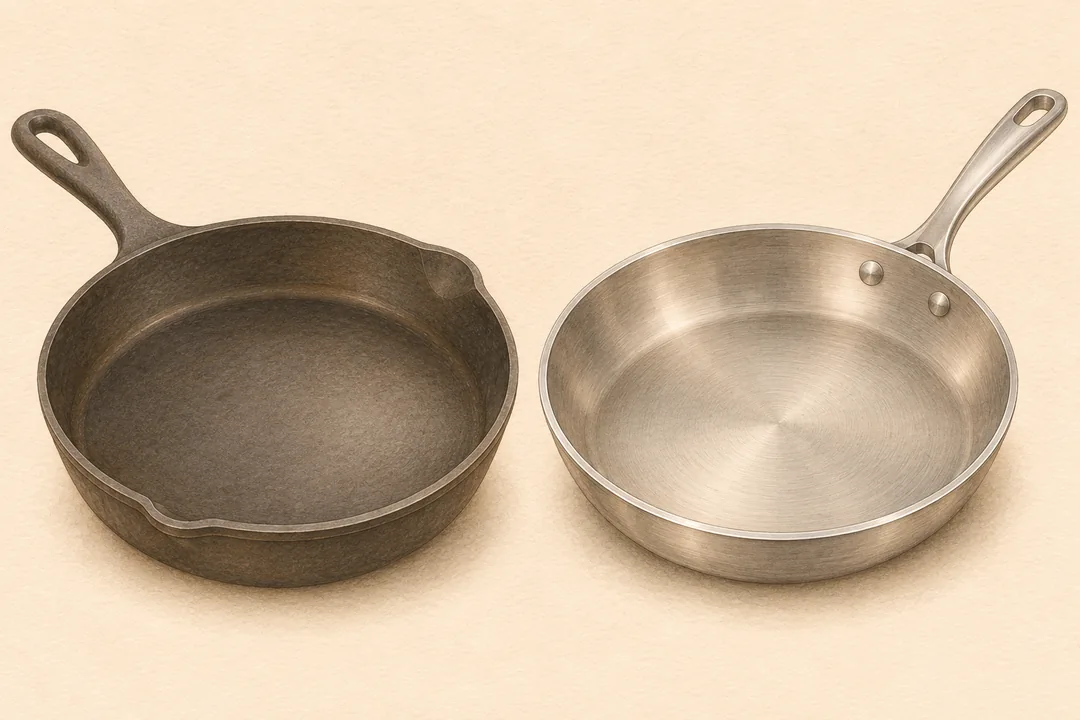
If you own just one of these pans, use it. For two steaks, the size of the flat base matters more than the name stamped on the handle. If the steaks would touch or cover nearly the whole base, cook one at a time. The extra room lets moisture escape, and you can reheat the skillet before the second steak goes in.
How to get a good crust in either pan
1. Dry the steak and warm the skillet. Blot both sides and the fatty edge with a paper towel. Surface water has to evaporate before the meat can brown. Salt the steak. Warm the skillet gradually over medium heat, following the maker’s guidance for your pan. Add a thin film of refined neutral oil, such as canola. When it flows easily and shimmers, lay the steak in away from you. If the oil starts smoking before the steak goes in, take the pan off the heat and let it cool.
2. Let the first side catch a crust. Listen for a steady sizzle. Use tongs to settle the steak flat, especially if the fat edge curls. Give it a little time, then ease up one corner. If it clings and the edge still looks pale, let it cook a little longer. When the underside is brown and lifts easily, turn it. That gentle lift is a better cue than a fixed number of minutes.

3. Finish the center gently. Once both faces have browned, lower the heat and turn the steak as needed. Add butter now if you like, spooning the foam over the top while it still smells nutty. For a very thick, marbled cut, it’s easier to bring the center along gently first and sear at the end. Our guide to grilling a thick Wagyu steak walks through that sequence over indirect and direct heat.
4. Take a center reading. Slide a food thermometer sideways into the thickest lean part, away from bone or a seam of fat. For whole beef steaks, USDA’s safe minimum is 145°F (63°C) before removing the steak from the heat, followed by at least a 3-minute rest. The steak doneness tool lets you slide to your thermometer reading and see how it compares with that minimum. Federal safe-temperature chart.
Turn the browned bits into a shallot pan sauce
As the steak rests, look at the skillet. The little brown patches stuck to the base are fond. Chestnut to mahogany is the color you want. If the whole base is black and smells acrid, skip the sauce this time and serve the steak with butter.
For two servings, pour off all but a teaspoon of fat. Lower the heat, add a tablespoon of finely chopped shallot and stir until softened. Pour in ½ cup unsalted beef or chicken stock. Scrape a wooden spoon across the base as the liquid bubbles, then simmer until about half the liquid remains. Take the pan off the heat and swirl in a teaspoon of cold butter. Taste for salt and spoon the sauce over the sliced steak. In stainless, try replacing a little stock with dry red wine for a brighter sauce.

If the sear goes sideways
The steak looks gray and liquid is pooling. If there’s a second hot skillet handy, move one steak straight into it to finish cooking. Otherwise, keep both cooking and let the liquid evaporate before turning. Next time, dry the surfaces thoroughly and sear in batches, letting the skillet reheat in between.
The crust tears when you turn it. Try a gentle nudge before flipping. If a browned corner releases but the middle still grips, work a thin turner under the crust a little at a time. If food routinely sticks to bare patches in your cast iron, our cast-iron seasoning guide shows how to rebuild the finish.
The outside is dark and the middle is still cool. Move the pan off the hot burner briefly, then finish over lower heat, turning and checking the center. With an especially thick steak, start with the two-zone method in the Wagyu recipe next time. You can brown the outside once the center is closer to its target.
For more on the pans themselves, see Lodge’s cast-iron cooking guide and All-Clad’s guide to stainless steel. The University of Wyoming Extension’s pan-sauce guide gives more ways to use the fond.